Teacher Professional Development

Diagnosing questioning heuristics and interaction quality from routine classroom audio/video. Sub-second audio timestamp traceability and longitudinal aggregation create comprehensive growth portraits for evidence-based teaching research.

Making instructional reflection evidence-based; making teacher growth clearly visible.

Target Audience
Principals · Teachers · Research Leads
First Visible Result
A lesson diagnostic report containing rubric radar charts, sub-second audio playback, and tiered action advice.
Recommended Starting Point
Conduct evidence-based refinement within seed teacher teams, gradually scaling across staff tiers.
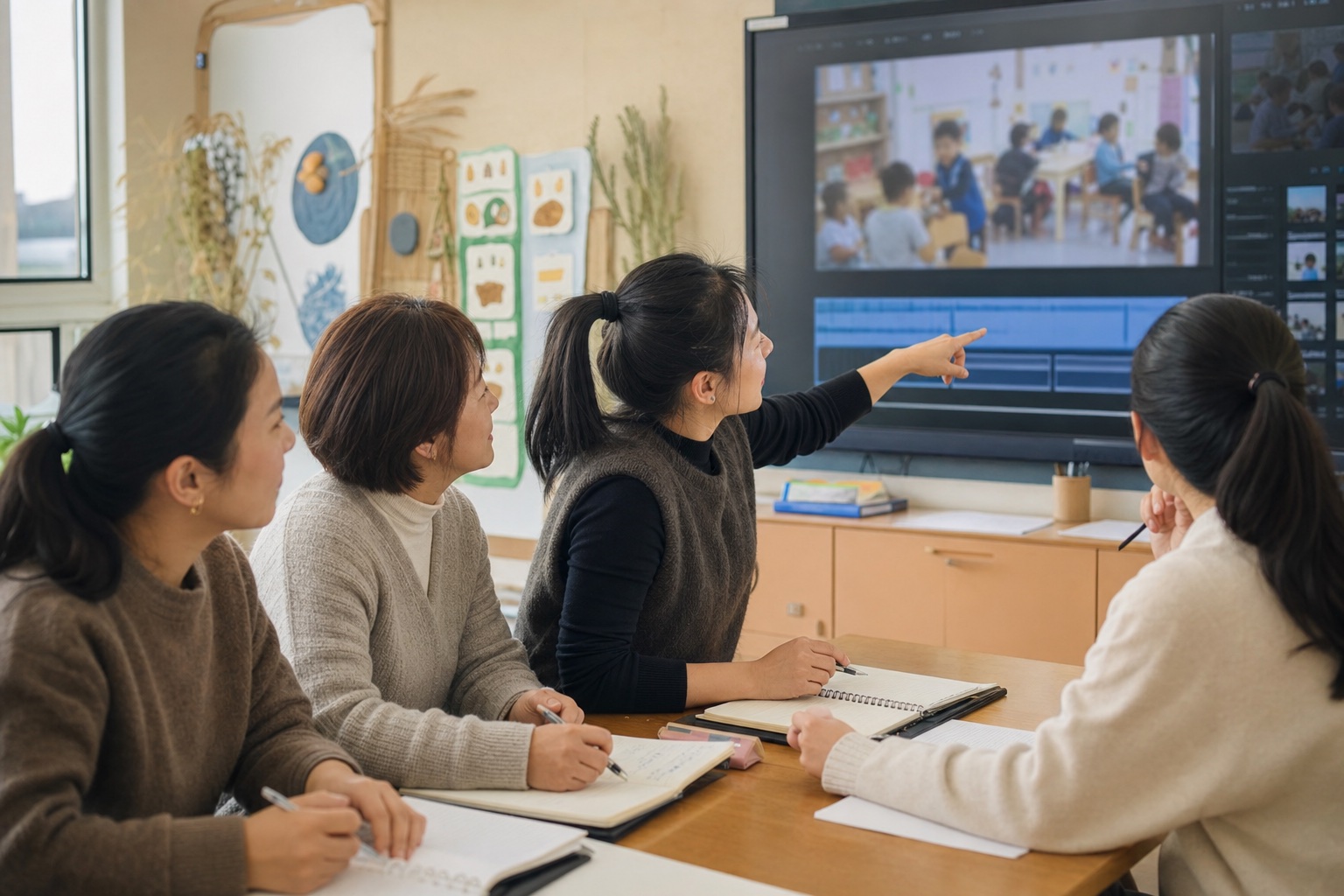
Teacher team collaboratively listening to lesson audio slices and conducting research discussions
Teacher Development · Evidence-Based Research

Grounded in routine classroom media and sub-second audio playback, shifting pedagogical research from impression scoring to objective evidence-based refinement.

Current Bottlenecks vs Solution Breakthroughs

From Subjective Evaluation to AI Evidence-Based Lesson Refinement

Addressing the low frequency, subjective scoring, and untrackable nature of traditional lesson reviews with AI evidence-based research paradigms.

Lesson Observation Frequency

Manual In-Class Visits, Low Frequency

Relying on research directors to physically sit in on classes is time-consuming and narrow in reach, leaving novice teachers with few systematic reviews per year.

Routine Capture · High-Frequency Full Coverage

Routine lesson audio/video uploaded with one click; AI automatically transcribes and evaluates questioning heuristics and interaction quality across dimensions for all faculty.

Observation Objectivity

Impressionistic Scoring, Prone to Controversy

Reviews rely on observer subjective impressions and fragmented notes, lacking quantitative metrics and dialogue facts, easily causing cognitive disagreements.

Sub-Second Playback · Quantified Objective Review

Conclusions are 100% anchored to original classroom audio and dialogue slices with sub-second playback; question tiers and wait times are quantified for dispute-free review.

Research Asset Preservation

Verbal Discussions, Hard to Replicate

Feedback stays in verbal chats or paper memos, making improvement tracking difficult and hindering the structured replication of master teacher experience.

Portfolio Accumulation · Preserving Exemplar Lessons

Automatically building longitudinal teacher growth portfolios and interaction radar evolution over time, preserving exemplar lessons as school digital assets.

Core Outcomes

Transitioning Teacher Feedback from Impressionistic Judgment to Evidence-Based Support

Placing classroom assessment, evidence verification, and phased research on a clear path to make feedback concrete and improvements verifiable.

01

Evidence-Traceable Assessment

Vital diagnostic points link directly to verbatim quotes and corresponding audio timestamps for precise teacher playback.

02

Actionable Single-Session Evaluations

Single reports present diagnostic rationale, classroom performance, and concrete suggestions to identify next practice priorities.

03

Reviewable Phased Research

Aggregating valid records by teacher and date range provides a shared objective foundation for phased pedagogical reviews.

Solution Overview

Teacher Professional Development

Layered view across product form, business domain, core AI engines, and implementation services.

Diagnostic results serve professional development strictly and are never used for public punitive scoring.

Objective Data Sources

Grounding Every Judgment in Classroom Realities

Assessment and pedagogical research only utilize authorized classroom materials relevant to current goals, maintaining full records for teacher verification.

Authorized Classroom Audio/Video

Upload one or more classroom video/audio clips as raw evidence for evaluating questioning techniques or instructional interactions.

Teacher & Assessment Metadata

Record teacher evaluated, date, assessment category, and media scope to distinguish each individual professional milestone.

Longitudinal Growth Records

Select valid historical growth records by teacher and date range to construct phased longitudinal aggregations.

Implementation Roadmap

Classroom Recording — AI Diagnosis — Evidence Traceability — Evidence-Based Refinement

Starting from one authentic classroom recording, embedding AI analysis into verifiable educator reflection and research workflows.

  1. 01

    01 · Classroom Recording

    Select teacher, assessment type, and authorized classroom media to formulate a clearly defined diagnostic task.

  2. 02

    02 · AI-Assisted Assessment

    Generate questioning or interaction support evaluations, presenting diagnostic rationale, verbatim quotes, and audio links.

  3. 03

    03 · Verification & Research

    Teachers and directors verify evidence, confirm action steps, and conduct phased milestone reviews using valid records.

Roles & Collaboration

Making instructional reflection evidence-based; making teacher growth clearly visible.

Establishing an objective evidence-based teacher development paradigm via 'Classroom Media — Multidimensional Diagnosis — Audio Evidence — Reflection — Longitudinal Growth'.

AI

Teacher Professional Development

Transcribing classroom dialogue with high precision, diagnosing questioning heuristics and interaction quality with audio links.

Educator

Principals · Teachers · Research Leads

Teachers reflect based on pedagogical intentions; directors provide pinpoint guidance anchored in objective slices.

Autonomous Teacher Reflection

Recording routine classroom sessions, reviewing diagnostic reports against audio evidence, and engaging in contextual reflection.

Research Directors & Principals

Organizing targeted lesson refinement workshops around objective classroom slices, formulating tiered staff development plans.

PalmBaby Expert Team

Delivering rubric training, introducing evidence-based research paradigms, and providing joint expert review workshops.

Implementation Roadmap

Selecting Assessment Entry Points by Research Scope

From master teacher demonstrations to campus-wide routine research, empowering professional progression across all teacher tiers.

Teachers & Research Coordinators

Starting from one authentic classroom evaluation, verifying evidence and confirming one actionable improvement focus.

Public, Private & Single Campuses

Selecting representative classrooms or research themes to establish steady rhythms for assessment, review, and milestone summaries.

Group & Regional Projects

Validating media standards, role duties, and research methods in benchmark campuses before defining multi-campus rollout scopes.

Implementation & Phased Acceptance

Conduct evidence-based refinement within seed teacher teams, gradually scaling across staff tiers.

A lesson diagnostic report containing rubric radar charts, sub-second audio playback, and tiered action advice.

  1. 01

    3 Days · Product Experience

    Select one assessment type and a representative classroom clip; experience the real flow from upload to report generation.

  2. 02

    7 Days · Workflow Run-Through

    Complete consent confirmation, media upload, report compilation, audio evidence playback, and manual review to identify an improvement focus.

  3. 03

    30 Days · Stage Acceptance

    Aggregate valid records over agreed periods to review assessment quality, staff engagement, and research actions before scaling.

Security, Compliance & Ethics

Ethical Safeguards & Teacher Professional Protection

Classroom media capture strictly adheres to informed consent. Diagnostic outputs are dedicated exclusively to professional growth and training, never for public punitive scoring.

Compliant Media Authorization

Confirming intended purpose, media boundaries, participant consent, and retention parameters prior to upload.

Fine-Grained Role Isolation

Individual teacher diagnostic files and campus-wide research summaries are strictly permission-isolated to protect educator privacy.

Final Human Professional Authority

AI diagnostics serve as references; teachers and research directors retain complete autonomy for modification and professional interpretation.

Solution & Implementation FAQ

Examining How Authentic Reports Are Formed

Explains solutions based on current capabilities: teacher questioning and instructional support evaluations generate single records; phased reports aggregate records across chosen periods.

What is the difference between Questioning and Instructional Support assessments?

Questioning assessment focuses on question tiers and guiding higher-order thinking; instructional support assessment evaluates interaction quality across 13 rubrics including cognitive development, feedback quality, and language modeling.

Can multiple classroom clips be uploaded in one assessment?

Yes. A single diagnostic session can include multiple audio/video clips of the same lesson; the system automatically merges, transcribes, separates speakers, and maps rubrics.

How do phased reports reflect long-term professional teacher growth?

Phased portraits aggregate data and radar charts across multiple lessons over a set period to illustrate growth trajectories, strictly avoiding biased conclusions from isolated lessons.

How do ClassBuddy and AI-Assisted Teacher Development relate to each other?

ClassBuddy focuses on daily teacher lesson planning, environment design, and administrative workload reduction, whereas AI-Assisted Teacher Development focuses on classroom interaction diagnostics.

Making instructional reflection evidence-based; making teacher growth clearly visible.

Diagnosing questioning heuristics and interaction quality from routine classroom audio/video. Sub-second audio timestamp traceability and longitudinal aggregation create comprehensive growth portraits for evidence-based teaching research.